

Thakur, Manindra Nath, and Shailja Tandon, editors. The Indian Knowledge System: Creative Dialogue on Intellectual Traditions in the 21st Century. Routledge. 2026.
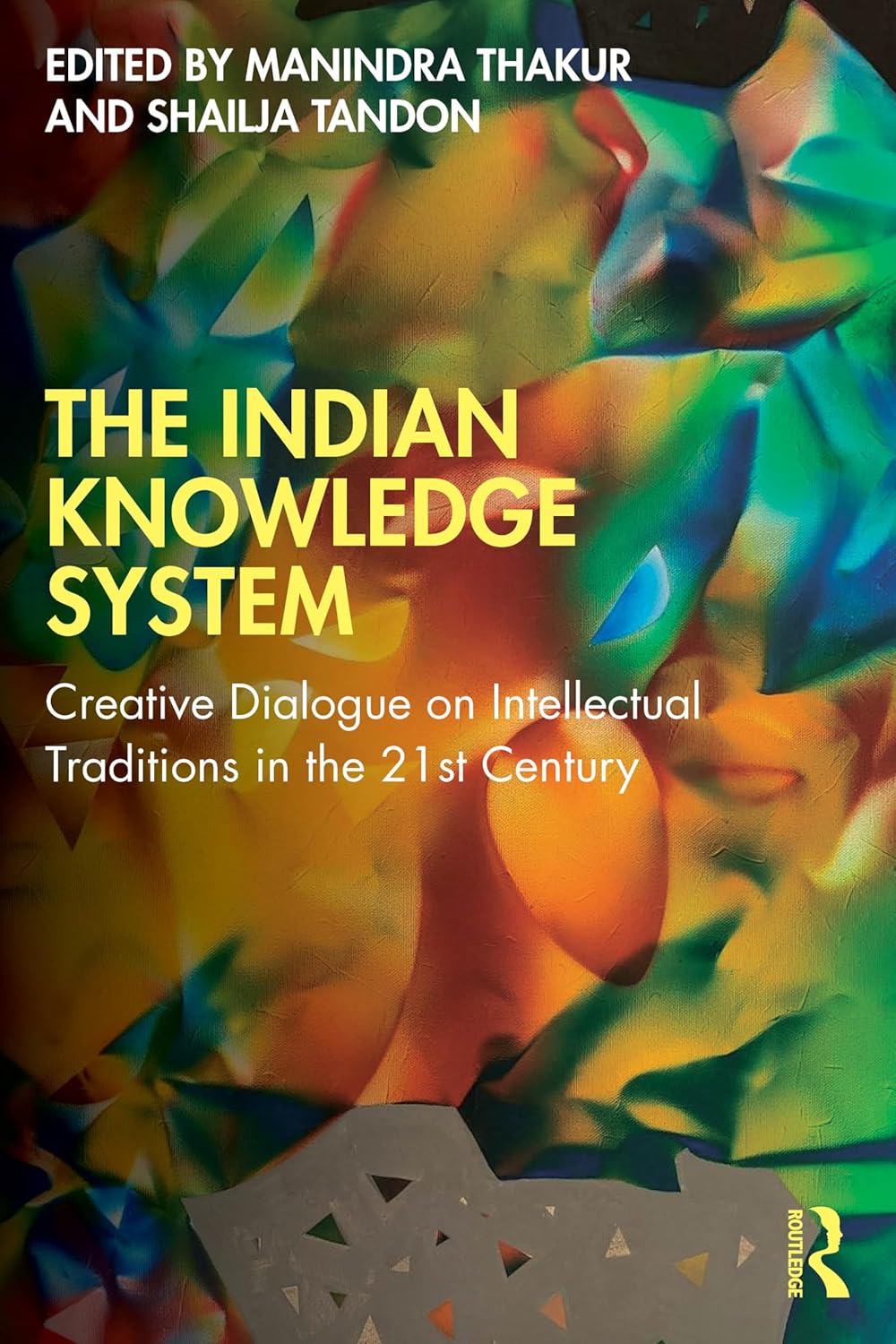
Shailja Tandon, Associate researcher at CSH, edited a volume with Manindra Nath Thakur, Associate Professor, Centre for Political Studies, at Jawaharlal Nehru University. The title of the book is Indian Knowledge System Creative Dialogue on Intellectual Traditions in the 21st Century, published by Routledge.
Description – This pioneering volume makes a vital intervention to the growing movement of decolonising conceptual frameworks and methodological approaches in social sciences. By exploring the profound depth and diversity of Indian intellectual traditions, it positions this knowledge system as an essential resource for democratising philosophical dialogue across global traditions. The book restores the ‘mediative flow’ in the Indian knowledge system and proposes a democratic negotiation among different epistemological frameworks, offering pathways toward a renewed philosophy capable of addressing humanity’s most pressing challenges. Through engagement with original ancient texts and lived practices, the authors develop nuanced approaches that enrich contemporary social science research methodologies. The volume presents a rich tapestry of intellectual traditions spanning the Indian subcontinent—from classical texts like the Panchatantra and Mahabharata to the Indigenous traditions of Adivasi communities; from performative traditions like Koodiyattam to philosophical frameworks including Sufism, Sikhism, and Kashmir Shaivism. It explores the intellectual legacies of figures such as Dara Shukoh, Kabir, and Gandhi, while also examining ritual hermeneutics and the lifeworlds of Indigenous communities in Kerala and Assam.
Representing a significant advancement in decolonial scholarship and cross-cultural understanding, this groundbreaking volume will be indispensable for students and scholars interested in the Indian knowledge system, Indian studies, South Asian studies, Indology, and Indian philosophy. It will be an important text for those interested in pedagogy, religion, consciousness studies, intercultural dialogue, Indigenous knowledge, cultural anthropology, literary studies, classics, language studies, and social anthropology.


